Show Up, Give Back, Write It Off? The Tax Deduction Mess Haunting Charity Fashion Events
Photo: The government of the Republic of Vietnam (South Vietnam)., Public domain, via Wikimedia Commons
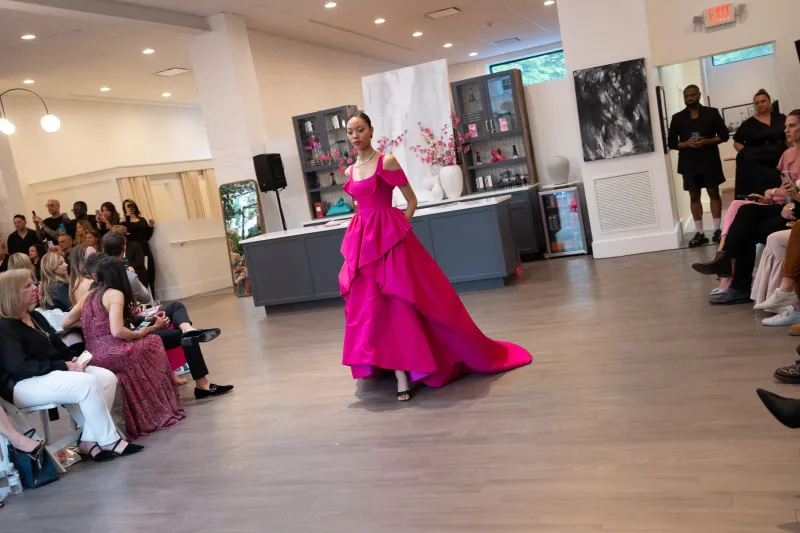
There's a moment at nearly every benefit fashion show that goes something like this: the lights come up, the final look walks the runway, and someone near the back starts quietly Googling whether their $500 ticket is tax deductible. Spoiler — it's probably not, at least not entirely. And yet, event after event, that assumption quietly persists, doing real damage to donors, designers, and the nonprofits working hard to earn trust in an already skeptical philanthropic landscape.
The financial mechanics of charity runway events are, frankly, a mess. And the people closest to them — the CPAs, the nonprofit directors, the fashion accountants who quietly fix the books after the afterparty — are exhausted talking about the same preventable mistakes year after year.
We decided it was time to actually listen.
The Ticket Stub Isn't a Blank Check
Let's start with the most widespread misconception: that buying a ticket to a charity fashion show equals a full tax deduction. It doesn't. Under IRS rules, when you attend a benefit event, you can only deduct the portion of your payment that exceeds the fair market value of what you received in return. That means the open bar, the gift bag, the seated dinner — all of it gets subtracted before your deduction kicks in.
"I cannot tell you how many clients come to me in February waving a gala ticket receipt like it's a golden ticket," says one New York-based CPA who works with several arts and fashion nonprofits. "They paid $800, they think they're deducting $800. But once we back out the meal and the entertainment value, they might be looking at $200, if that."
Nonprofits are legally required to provide a written disclosure stating the estimated fair market value of goods and services received — but in practice, this disclosure is often buried in fine print, missing from digital confirmations, or just vague enough to be useless. That's not just an inconvenience for donors. It's a compliance problem for the organization.
Designers Are Flying Blind, Too
Attendees aren't the only ones getting tripped up. Designers who donate looks, time, or materials to benefit shows often assume they're in line for a generous deduction — and then discover the reality is far more complicated.
If you're a designer donating a garment you created, the IRS limits your deduction to the cost of materials, not the retail value of the piece. That $3,000 gown you donated? If your material costs were $400, that's your ceiling. The same principle applies to artists, craftspeople, and anyone donating their own creative work.
"It catches people off guard every single time," says a Los Angeles accountant who specializes in fashion industry clients. "Designers hear 'charitable donation' and they think they're getting credit for what the piece would sell for. The rules just don't work that way for creators."
The workaround — selling the item at fair market value and then donating the cash proceeds — is both legal and more financially beneficial, but almost nobody does it because the logistics feel complicated and the events aren't set up to facilitate it.
Nonprofits Aren't Off the Hook
Here's where things get uncomfortable: many of the organizations hosting these events aren't doing enough to protect their donors, their vendors, or themselves. Incomplete acknowledgment letters, failure to assign fair market values to event perks, and murky accounting between restricted and unrestricted funds are problems that surface repeatedly in conversations with people who've worked behind the scenes at fashion fundraisers.
"Transparency isn't optional — it's the law," says the director of a mid-sized nonprofit that runs an annual benefit runway event in Chicago. "But I've seen organizations that are so focused on the event production that the financial documentation becomes an afterthought. And then they wonder why major donors don't come back."
For nonprofits bringing in over $250 in donations from any single donor, a contemporaneous written acknowledgment is required. For events generating auction income, the rules get even more layered. Silent auctions — a staple of the charity runway circuit — carry their own deduction limits based on fair market value, and if the winning bidder pays more than that value, only the excess is deductible.
None of this is impossible to manage. It just requires intentionality that a lot of event organizers, especially smaller grassroots ones, simply don't have the infrastructure to provide.
What Good Actually Looks Like
The good news is that some organizations are getting this right, and their approach is replicable. A few practices that CPAs and nonprofit leaders consistently point to as best-in-class:
Itemized donor receipts sent within 30 days. Not a generic thank-you email — an actual acknowledgment that names the donation amount, states whether any goods or services were provided, and gives a good-faith fair market value estimate for those benefits.
Clear auction documentation. Every item in a silent or live auction should have a documented fair market value, established before bidding opens, and disclosed to bidders in writing.
Designer and vendor agreements that address deductions upfront. If a designer is donating a look, the paperwork should clarify the deductible amount before the event, not six months later during tax prep.
A dedicated financial lead for every event. Not the event planner. Not the executive director wearing twelve hats. Someone whose specific job is to make sure the money is documented correctly.
The Trust Problem Is Real
There's a bigger issue underneath all of this, and it's worth naming directly: when donors feel misled — even unintentionally — about what they can and can't deduct, they lose faith in the organizations they were trying to support. In a fundraising environment where trust is already fragile, that's a serious problem.
Charity fashion events have enormous potential. They combine community, culture, and cause in a way that traditional fundraising galas often can't. But that potential gets undermined every time someone ends up in a tense conversation with their accountant, or realizes they overclaimed a deduction and now owe the IRS.
Getting the financial mechanics right isn't just a compliance issue. It's a respect issue — for donors, for the designers who show up to support causes they believe in, and for the communities these events are ultimately trying to serve.
The runway is ready. The receipts need to catch up.