The Morning After the Runway: Why Charity Fashion Highs Fade Faster Than You Think
Saturday night was electric. The models were stunning, the cause was urgent, the speeches made you tear up, and you pulled out your phone and pledged $200 before the finale music even faded. You drove home buzzing. You told your friends. You maybe even posted about it.
Then Monday happened.
Work emails. Grocery runs. The news cycle doing what it always does. And somewhere between the coffee maker and the commute, that fierce, chest-swelling commitment to the cause quietly packed its bags and slipped out the back door.
This isn't a character flaw. It's neuroscience — and it's one of the most undertalked problems in the charity fashion world.
Your Brain on Runway
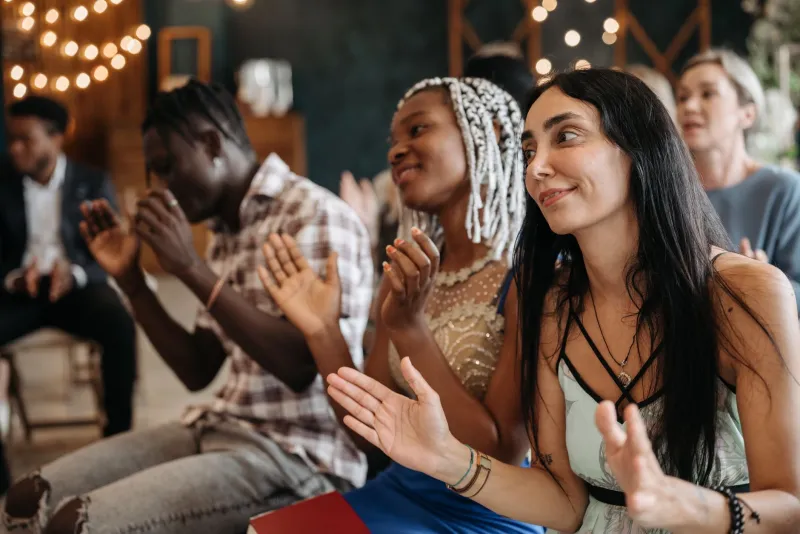
Here's what's actually going on inside your head during a high-production charity fashion event: your brain is getting absolutely flooded. Live music, dramatic lighting, beautiful clothing, emotional storytelling, and a room full of people who all seem to care as deeply as you do — that's a multi-sensory dopamine delivery system.
Researchers studying collective emotional experiences — concerts, sporting events, religious gatherings — consistently find that shared, high-stimulation environments produce what some call "emotional contagion," where the feelings of the crowd amplify your own. At a charity runway show, that contagion gets layered with moral elevation, a specific emotional state triggered when we witness acts of generosity or virtue. Studies out of the University of Virginia have linked moral elevation to a genuine surge in prosocial motivation — the desire to help, give, and connect.
The problem? That surge is time-sensitive. Dopamine is a short-game neurotransmitter. Once the stimuli disappear — the music stops, the crowd disperses, the Instagram stories expire — the neurological scaffolding holding up your big charitable intentions starts to wobble. By Tuesday, for a lot of people, it's already collapsed.
The Numbers Organizers Don't Love to Share
We talked to several charity fashion event organizers (some of whom asked to remain anonymous because, honestly, these stats aren't great PR). The picture they painted was consistent and a little uncomfortable.
One New York-based organizer who runs an annual benefit runway show told us that roughly 60% of pledges made during their event's live giving moment were fulfilled within 48 hours. The remaining 40%? A significant chunk required follow-up reminders — and even then, attrition was real. "We'd see people who were absolutely sobbing during the beneficiary's speech just... ghost us by the following week," she said. "It's not malicious. People just move on."
A Chicago-based event producer noted that their post-show email open rates dropped by nearly half between the day-after message and the two-week follow-up. "The runway high has a very specific half-life," he said. "And most of us in this space haven't built our retention strategies around that reality."
Volunteer sign-up rates tell a similar story. People who enthusiastically added their names to advocacy lists during an event frequently don't show up for the first volunteer orientation. The gap between intention and action — what behavioral economists call the "intention-behavior gap" — is wide, and charity fashion events, for all their power to inspire, are not immune to it.
Why the Format Itself Creates the Problem
There's something worth examining about the charity runway format specifically. It's designed — beautifully, intentionally — to maximize emotional impact in a single evening. That's its superpower. But that same design creates a contained experience, a beginning and an end, a narrative arc with a clean resolution.
When we leave a well-produced charity fashion event, our brains have essentially processed a complete story. We showed up. We felt things. We gave. The arc is closed. And closed arcs, psychologically speaking, don't tend to generate ongoing motivation. Open loops do.
This is actually something the entertainment industry figured out a long time ago — serialized storytelling keeps audiences coming back because the story never fully resolves. Charity events, by contrast, often accidentally signal to attendees that the story is over when the lights come up.
What Actually Works
The good news is that organizers are starting to get creative about engineering for the long game, not just the big night.
Give people a next step before they leave the building. Not a vague "stay connected" — a specific, low-friction action. Sign up for this text list. Show up to this neighborhood cleanup on this date. Follow this designer's advocacy account. Concrete next steps taken in the moment of peak motivation are dramatically more likely to stick than follow-up asks made days later.
Reframe the event as chapter one, not the whole story. Some organizers are experimenting with explicitly telling attendees that the show they just watched is the beginning of a longer campaign. Framing matters. When people understand they're entering an ongoing relationship rather than attending a one-time event, their psychological contract with the cause shifts.
Use the 72-hour window aggressively. The research is pretty clear that the window of elevated motivation post-event is narrow. Organizations that send personalized, emotionally resonant follow-up within 24 to 72 hours — not generic receipts, but actual storytelling that reconnects donors to the specific moment that moved them — see meaningfully better retention.
Build community, not just audiences. The charity fashion events that seem to generate the most durable engagement are the ones where attendees leave feeling like they've joined something, not just attended something. Group chats, exclusive updates, behind-the-scenes access to the cause's ongoing work — anything that maintains a sense of belonging and insider connection past the event date.
Make giving habitual, not heroic. One-time big pledge moments feel great but are structurally fragile. Organizations that offer easy conversion to recurring monthly giving — even at much smaller amounts — build more predictable, sustainable donor bases. Turning a $200 one-night pledge into a $20/month commitment isn't a downgrade. It's a relationship.
The Bigger Conversation
None of this is a knock on the power of a great runway show. If you've ever been in a room when a beneficiary story lands just right, when the clothes are spectacular and the cause is real and the energy is undeniable — you know that something genuinely meaningful is happening. Charity fashion events can crack open empathy in people who thought they were too cool or too busy to care.
But cracking something open is only valuable if what gets built in that opening has somewhere to go.
The runway is the invitation. What happens Monday morning — and the Monday after that — is the actual work. The events that understand that distinction are the ones building something that outlasts the applause. And that's the kind of fashion moment worth getting dressed up for.