Every Body on the Runway: How Size-Inclusive Benefit Shows Are Changing Fashion Philanthropy for Good
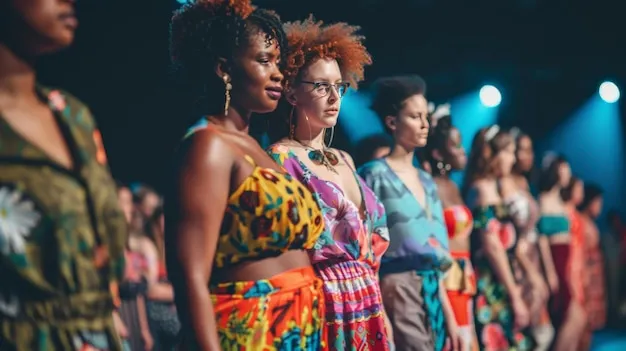
Photo: diverse size inclusive fashion show runway models event, via img.freepik.com
Imagine you've bought a ticket to a charity fashion show. You believe in the cause, you love the venue, you've been looking forward to this night for weeks. And then the lights go down, the music starts, and every single model on that runway looks nothing like you. Same height. Same frame. Same narrow definition of what a body is supposed to look like in clothes.
For a lot of people — the majority of American adults, statistically speaking — that's not a hypothetical. That's been the reality of fashion philanthropy for decades. And it's been costing these events more than just goodwill.
The Old Runway Model Was Leaving Money on the Table
Here's something the traditional fashion world has been slow to reckon with: the average American woman wears a size 16-18. The average charity fashion event, until recently, featured models in a size 0-6 range almost exclusively. That's not just a representation problem. It's a fundraising problem.
When attendees don't see themselves reflected in an event, engagement drops. Emotional connection — which is the single most powerful driver of charitable giving — weakens. People are less likely to donate generously to an experience that implicitly tells them they don't fully belong in the room.
Event producers who've shifted to size-inclusive runway presentations are reporting something striking: donor engagement goes up. Not a little. Meaningfully.
"When we added plus-size, petite, and tall models to our annual gala runway, our paddle raise numbers increased by nearly 30 percent compared to the prior year," said Denise Okafor, who produces charitable fashion events in Houston for healthcare nonprofits. "I don't think that's a coincidence. People were emotionally activated in a way they hadn't been before. They felt like the event was for them."
Designers Who Are Leading the Shift
The designers showing up for inclusive charity runways aren't fringe players — they're becoming some of the most sought-after voices in cause-driven fashion.
Christian Siriano, who has long been vocal about his commitment to dressing all bodies, has participated in benefit events where the casting brief explicitly required a full range of sizes. He's talked publicly about the creative challenge and reward of designing for diverse bodies, and about how it changes the energy in the room when the audience sees the full spectrum of humanity on stage.
Independent designers are leading this charge in even more personal ways. Brooklyn-based designer Amara Ndidi, who creates occasion wear in sizes 0-28, has built her entire event strategy around inclusive runway presentations for causes she personally champions — including body image organizations and eating disorder recovery nonprofits. "There's no version of that work that makes sense with a size-exclusive runway," she said. "The message and the medium have to match."
For Ndidi, size inclusivity on the runway isn't a checkbox. It's a design philosophy that shows up in the clothes, in the casting, in the way models are styled and lit and directed. "Every body deserves to look extraordinary," she said. "That's not a radical statement. That's just fashion doing its job."
What Attendees Are Actually Saying
The audience perspective on this shift is where things get genuinely moving.
At a benefit fashion show in Minneapolis last fall — organized to raise funds for a local domestic violence shelter — attendees were surveyed about their experience after the event. Among respondents who identified as plus-size, 84% said seeing models who reflected their size made them feel more connected to the event. More than 70% said it influenced their decision to donate.
One attendee, a woman in her early 50s named Carol, put it simply: "I've been to a lot of these events over the years, and I always felt like a spectator. Like I was watching a world that wasn't quite for me, even though I was in the room. This time, I cried during the runway. I gave more than I planned to. Because I felt like they actually saw me."
That emotional resonance isn't soft data. It's the mechanism by which charitable giving works. People give to things they feel connected to. Representation creates connection. The math isn't complicated.
Challenging the Industry's Default Settings
Let's not pretend this shift is happening without friction. The traditional fashion industry still exerts enormous pressure on events that want mainstream coverage, brand sponsorships, and designer partnerships. There are still sponsors who push back on inclusive casting. There are still photographers who don't know how to shoot diverse bodies with the same skill and flattery they bring to straight-size models.
These are real barriers, and organizers navigating them deserve credit for doing so. But the tide is shifting in ways that make the old defaults harder to defend.
The rise of size-inclusive fashion brands — Eloquii, Universal Standard, Good American, and others — has created a new ecosystem of potential sponsors who are actively looking for events that reflect their customer base. For charity event producers, that's not just a values alignment. It's a funding opportunity.
"We've been able to attract sponsors we never could have gotten five years ago because we're explicit about our inclusive casting," said one event organizer in Atlanta. "Brands that serve a diverse customer want to be associated with events that look like their customers."
Style as a Form of Solidarity
At its core, the size-inclusive runway movement in charitable fashion is about something bigger than aesthetics or even fundraising metrics. It's about what we communicate when we put on an event and ask people to care.
When a benefit fashion show deliberately casts models of all sizes, it sends a message that the community it's serving — and the community it's asking to give — includes everyone. That's not just good optics. It's good values made visible.
At Catwalk 4 A Cause, that's exactly what we believe fashion philanthropy should be doing. The runway is a platform. What we put on it tells the world what we think matters. And when every body gets to walk — when every person in that audience sees someone who looks like them owning that stage — something shifts in the room that no amount of celebrity bookings or premium auction items can manufacture.
It's the feeling of belonging. And it turns out, belonging is one of the most powerful fundraising tools in existence.
The catwalk is getting wider. And the causes it serves are better for it.