Building Their Own Tables: How BIPOC Designers Are Rewriting Fashion Philanthropy From the Ground Up
The traditional charity fashion show circuit has a look. It tends to take place in a downtown hotel ballroom or a converted warehouse with exposed brick. The guest list skews wealthy and white. The nonprofits being supported — however worthy — are often selected by committees of board members who reflect the same demographic. And the emerging designers tapped to show their work? Well, they tend to come from the same pipelines that have always fed the industry.
For a lot of BIPOC designers, that picture has felt less like an invitation and more like a locked door with a peephole.
So they stopped knocking. And started building.
The Gatekeeping Nobody Wants to Name
Let's say it plainly: the charitable fashion world, like the broader fashion industry, has a diversity problem that runs deeper than representation on the runway. It shows up in which designers get tapped for benefit shows. It shows up in which nonprofits get platformed. And it shows up in the funding structures that determine who gets to produce these events in the first place.
"I applied to three different charity runway showcases in my city over two years," says Dominique Frazier, a womenswear designer based in Atlanta whose work centers Afrocentric textiles and sustainable production. "I had the portfolio. I had the community connections. I didn't have the 'right' relationships. That's the part they don't put in the application."
Frazier's experience isn't unusual. Designers and organizers across the country describe a charity runway landscape where access is often determined by existing social capital — the kind that's harder to accumulate when you're not already embedded in the networks that run these events.
The result is a double exclusion: BIPOC designers miss out on the visibility and credibility that charity runway participation can provide, and the communities those designers are often most connected to — communities that are frequently underserved by the nonprofits that do get platformed — remain invisible in the philanthropic fashion conversation.
What Getting Shut Out Builds
Here's the thing about being excluded from a system: sometimes it forces you to build something better.
That's exactly what's happening in cities across the US, where BIPOC designers are creating their own charitable runway ecosystems — events, collectives, and funding networks that operate entirely outside the traditional structure and, in many cases, are outperforming it.
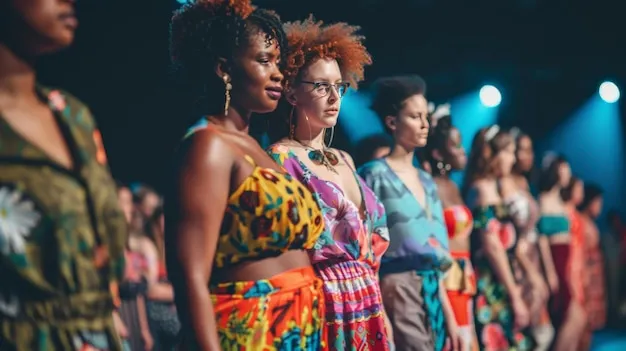
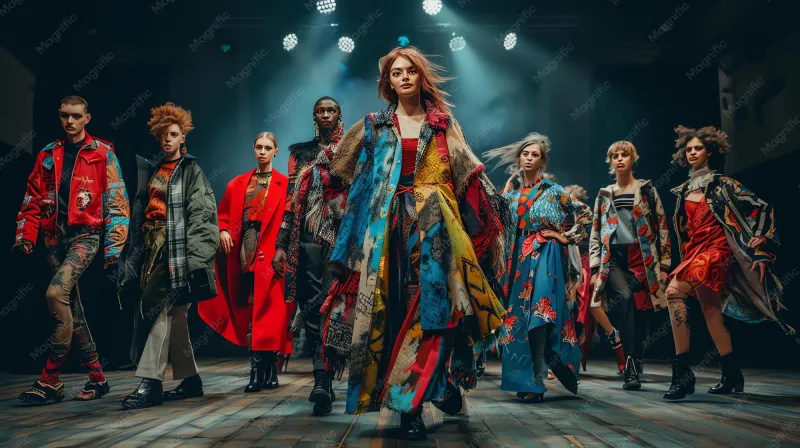
In Houston, the Stitch & Serve Collective — founded by designer and community organizer Priya Nkosi — has produced four annual benefit runway events since 2021, each one spotlighting exclusively BIPOC-owned labels and directing proceeds to Houston-area nonprofits led by and serving communities of color. Last year's event raised over $60,000, with zero corporate fashion sponsors. The funding came from local business partnerships, community donors, and a crowdfunding campaign that Nkosi says was fueled almost entirely by word of mouth.
"We didn't need the gatekeepers," she says simply. "We needed our community. And our community showed up."
Redefining Which Causes Get the Spotlight
One of the most significant ways these alternative ecosystems differ from traditional charity runway structures is in how they choose their nonprofit partners. Rather than defaulting to large, well-known organizations with established donor bases, many BIPOC-led fashion philanthropy initiatives are deliberately directing resources toward smaller, grassroots nonprofits that are chronically underfunded — often because they lack the visibility and donor networks to compete for attention in traditional philanthropic spaces.
"There's a funding gap that mirrors the representation gap," says Dr. Aaliya Montrose, a nonprofit funding researcher at a DC-based policy institute. "Organizations led by and serving Black, Indigenous, and communities of color receive a disproportionately small share of charitable giving, even when they're doing some of the most effective work. Fashion philanthropy has an opportunity to correct that imbalance — but only if it's intentional about it."
Designers like New York-based menswear creator Jerome Tillman are being exactly that intentional. His annual benefit showcase, "Thread & Truth," is built around a model where partner nonprofits are nominated by community members — not selected by a board. Last year's beneficiary was a Bronx-based organization providing legal aid to immigrant families. The year before, it was a Brooklyn mutual aid network.
"I'm not interested in doing a runway show for a cause that's already getting plenty of attention and dollars," Tillman says. "I want to use whatever platform I have to shine a light on the work that's happening in the shadows."
Innovative Models Worth Watching
Beyond individual events, some BIPOC designers are building infrastructure that could reshape how charitable fashion operates at a systemic level.
In Los Angeles, the Melanin & Muslin Fund — co-founded by three designers who met at a trade show — operates as a rotating grant program funded by a percentage of proceeds from member designers' sales throughout the year. When benefit runway season arrives, the fund is already capitalized, allowing them to produce events without relying on last-minute sponsorship scrambles. Grant recipients are selected by a community advisory panel, not a fashion industry board.
In Chicago, designer Camille Osei has pioneered a "pay-it-forward runway" model where attendees at her benefit shows can purchase additional tickets at a reduced rate that are then distributed free to community members who want to attend but can't afford the ticket price. The result is an event room that actually reflects the community the cause serves — something that's rare in traditional charity runway spaces.
"When the people the nonprofit is serving are sitting in the audience, the whole energy of the event changes," Osei says. "It stops feeling like charity and starts feeling like community."
What Mainstream Fashion Can Learn
The honest answer? A lot.
These grassroots models are demonstrating that charitable fashion doesn't require a luxury hotel ballroom, a celebrity host, or a blue-chip corporate sponsor to make a real impact. They're showing that community-driven curation produces more authentic storytelling than committee-selected causes. And they're proving that when you build events with the communities you want to serve — rather than for them — the results are more meaningful and more financially sustainable.
For traditional charity runway organizers willing to do some honest self-reflection, the opportunity is clear: open the application processes, diversify selection committees, prioritize underfunded nonprofits, and — most importantly — stop treating BIPOC designers as diversity additions to existing structures and start treating them as architects of new ones.
The runway belongs to everyone. It's past time the philanthropic fashion world caught up to that reality.
The designers building these alternative ecosystems aren't waiting for permission. They're already walking.