Purpose Over Profit: The Designer Exodus Toward Cause-Driven Fashion Is Rewriting the Rules of Cool
Photo: Titit, CC BY-SA 4.0, via Wikimedia Commons
Let's talk about what's actually aspirational right now.
It's not the $4,000 handbag with a three-year waitlist. It's not the front-row seat at a show so exclusive the invite list reads like a Forbes ranking. What's genuinely aspirational in 2024 — what's making style-conscious Americans lean in and take notice — is a designer who uses their platform to move the needle on something real.
We are living through a fundamental identity shift in high fashion. And it's about time.
The Commercial Runway Is Losing Its Shine
For decades, the fashion industry's prestige economy ran on scarcity, spectacle, and celebrity proximity. The more unattainable, the more desirable. The bigger the production budget, the more legitimate the brand. But something has cracked in that model — and the fracture lines are visible everywhere.
Consumers, particularly younger ones, are exhausted by fashion that exists purely for fashion's sake. They're increasingly skeptical of luxury brands that spend millions on runway spectacle while contributing nothing of substance to the world around them. And they're paying close attention to which designers are willing to back up their aesthetic values with actual values.
This isn't just idealism. It's market data. According to a 2023 Edelman Trust Barometer report, nearly two-thirds of American consumers say they choose, switch, or boycott brands based on social stance. In fashion, that number skews even higher among the 18-to-35 demographic that every designer is desperately trying to reach.
The math isn't complicated. Purpose sells.
The Designers Who Are Actually Walking the Walk
So who's leading this charge? A few names worth knowing — and watching.
Prabal Gurung has long been one of fashion's most vocal advocates, using his runway and his platform to champion immigration rights, LGBTQ+ visibility, and South Asian representation. But in recent seasons, he's gone further — partnering with nonprofit organizations to host cause-aligned runway events where a portion of proceeds benefit advocacy groups directly. His shows feel less like product launches and more like manifestos.
Kerby Jean-Raymond of Pyer Moss essentially rewrote the playbook. His collections have functioned as immersive cultural essays — on Black history, on systemic injustice, on joy as resistance. Jean-Raymond famously paused his brand's commercial activity to focus on community-rooted creative projects, a move that would have been career suicide a decade ago. Today, it's widely regarded as one of the most artistically and morally coherent decisions in recent fashion memory.
Stella McCartney, though British-born, has become a defining figure in the US sustainable fashion conversation. Her refusal to use leather or fur, her vocal climate advocacy, and her willingness to collaborate with environmental organizations rather than just write checks has positioned her brand as a genuine standard-bearer for what cause-driven luxury can look like.
Closer to the grassroots end of the spectrum, designers like Fe Noel and Sergio Hudson have used their platforms and their collections to amplify Black economic empowerment and community investment — proving that cause-driven fashion isn't just the domain of legacy houses with enormous budgets.
What's Actually Driving This Shift?
Here's where it gets interesting — because this isn't purely altruistic. (And honestly, it doesn't have to be. Good outcomes don't require pure motives.)
Several forces are converging to make purpose-driven fashion not just morally appealing but strategically smart.
First, there's the attention economy problem. In a world where every brand is fighting for eyeballs, a designer who hosts a runway event benefiting, say, reproductive rights organizations or gun violence prevention groups generates a kind of press coverage and social media engagement that no traditional advertising budget can buy. The story is the campaign.
Second, there's talent retention. Designers, stylists, photographers, and creative directors increasingly want to work for brands that reflect their values. The most sought-after creatives in the industry aren't just asking about salaries anymore — they're asking about mission.
Third — and perhaps most significantly — there's the rise of what we might call the conscious consumer class. These are style-minded Americans who have the means to buy luxury or near-luxury fashion and are actively choosing to direct those dollars toward brands that demonstrate social accountability. For this group, wearing a designer who champions causes they care about is a form of identity expression every bit as powerful as the aesthetic of the garment itself.
Cause-Driven Runway Events as the New Status Symbol
This is where it gets particularly relevant for what we do here at Catwalk 4 A Cause.
The charity fashion show — once perceived as a slightly fusty, country-club-adjacent affair — has been completely reimagined. When a high-profile designer lends their name, their creative vision, and their network to a cause-driven runway event, the result is something that transcends traditional fundraising.
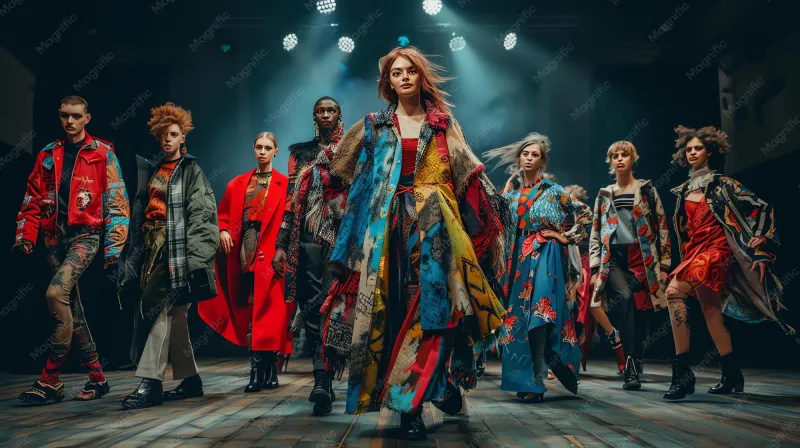
Think about what that looks like in practice: a show where every look tells a story connected to a specific cause, where the guest list includes activists and advocates alongside editors and influencers, where the post-show conversation is as much about the mission as the fashion. That's not a charity gala. That's a cultural event. That's the kind of thing people talk about for years.
And increasingly, that's what the most forward-thinking designers are building toward.
The Critics Aren't Wrong — But They're Missing the Point
Not everyone is on board, and fair enough. There's a legitimate critique that "purpose-washing" — the fashion industry's version of greenwashing — is a real risk. When brands slap a cause on a collection without genuine organizational commitment or material contribution, it's transparent and it's gross.
But the answer to performative activism isn't cynicism about all activism. The answer is accountability — demanding that designers show their receipts, that the partnerships are real, that the money actually moves, and that the advocacy continues beyond the runway season.
The designers who are doing this right know that. They're building long-term relationships with organizations. They're showing up off-camera. They're using their platforms consistently, not just when it's convenient for a press cycle.
Fashion as a Force — Not Just a Fantasy
Here's what we believe at Catwalk 4 A Cause: fashion has always been about more than clothing. It's been about identity, aspiration, belonging, and power. The question is always whose identity, whose aspiration, whose belonging — and power in service of what.
When designers choose to direct that enormous cultural energy toward social change, something genuinely exciting happens. The runway stops being just a fantasy and starts being a force.
That's the shift we're watching. That's the shift we're here to celebrate — and to push further.
Because in 2024, the most stylish thing a designer can do is give a damn. And the most stylish thing a consumer can do is support the ones who do.