Diverse Runways, Same Old Boardrooms: Who Really Controls the Money at Charity Fashion Events
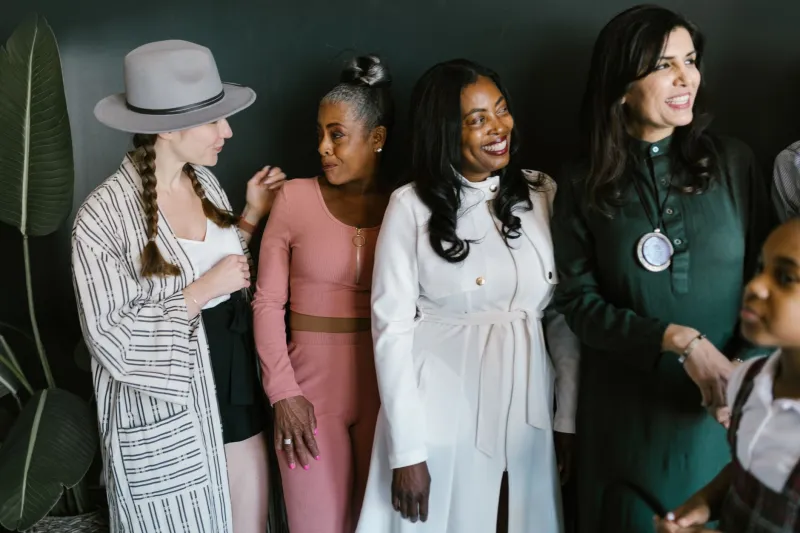
There's a moment at almost every major charity runway show that feels genuinely electric. The models walk out — beautiful, diverse, commanding the room — and the audience erupts. Women of color are front and center. The cause being championed often is their community: maternal health disparities, housing insecurity, educational access. The energy feels real. The intention, at least on the surface, reads as genuine.
Then the event ends, the lights go down, and the checks get written. And that's where things get complicated.
The Pretty Picture Problem
Representation on a runway is visible. It photographs well. It trends. But representation in funding allocation meetings, on nonprofit boards, and in event planning committees? That's a lot harder to Instagram.
Dr. Renee Okafor, executive director of a women's health nonprofit based in Atlanta, has been on the receiving end of charity fashion fundraising more than once. She's grateful for the visibility — and exhausted by the limits of it.
"We get invited to be the story," she says. "Our community is the reason people buy tickets, the reason donors feel good about showing up. But when it comes to deciding how the money gets spent, or even how much of it actually reaches us, we're often not in that conversation at all."
This is the diversity paradox that's been quietly nagging at the charity fashion world for years, even as the industry celebrates its progress on casting. The runway looks more like America. The power structure, in too many cases, still doesn't.
Who's Actually Running the Show
Charity runway events typically involve multiple layers of stakeholders: the producing organization or event company, the headlining designer or brand partner, the nonprofit beneficiary, and a donor base that often skews wealthy, white, and disconnected from the communities being served.
Each of those layers comes with its own set of priorities — and its own gravitational pull on where money flows and who gets a seat at the decision-making table.
Marcus Webb, who has produced fundraising events in New York and Chicago for over a decade, is candid about the structural tensions he's observed. "The beneficiary organization is often brought in late," he admits. "The venue's booked, the sponsors are locked, the aesthetic vision is set. By the time the nonprofit is really looped in, there's not a lot of room to shape things. They're a guest at their own fundraiser."
That dynamic has material consequences. When nonprofits led by and serving communities of color aren't involved in structuring an event, they're less likely to negotiate favorable fund-sharing agreements, less likely to have their programmatic needs accurately represented to donors, and less likely to build the kind of donor relationships that lead to long-term giving.
The Optics Trap
Here's what makes this especially tricky: the diversity on the runway isn't fake. It's genuinely a step forward from the days when charity galas featured homogeneous lineups and treated marginalized communities as abstract causes rather than present stakeholders. Progress is real.
But progress on aesthetics can actually obscure stagnation on substance. When a room full of donors sees a beautifully diverse catwalk, they feel like they've witnessed something equitable. The discomfort that might otherwise prompt harder questions — about governance, about fund allocation percentages, about who holds the mic at the post-event press release — gets smoothed over by the visual evidence of inclusion.
Jasmine Tran, a community organizer in Los Angeles who works with Southeast Asian women's advocacy groups, calls this "decorative diversity."
"You can use our faces and our stories to make the event feel meaningful," she says, "without actually transferring any power or resources. And because it looks like inclusion, it becomes harder to critique. You point it out and suddenly you're the one being ungrateful."
What Authentic Partnership Actually Looks Like
The good news — and there is good news — is that some event organizers are actively rethinking the model. A handful of emerging charity runway initiatives are building structures where community organizations aren't just beneficiaries but co-architects.
That means involving nonprofit leadership in venue selection and event theming. It means offering revenue-sharing agreements that are negotiated before expenses are tallied, not after. It means creating advisory roles with real authority, not just honorary titles on a program booklet.
Some organizers are also rethinking who gets to speak at events. Rather than centering celebrity hosts or major donors during the program, they're creating space for nonprofit leaders and community members to address the audience directly — not as symbols of need, but as experts on their own experience and advocates for specific, actionable support.
Webb has started incorporating what he calls a "community co-producer" model into his events. "We bring the beneficiary organization in at the concept stage," he explains. "They have input on the creative direction, they help select the designers, and they have a formal role in how we talk about the cause. It takes longer to plan, but the events are better — and the money actually lands where it should."
The Donor Accountability Gap
There's another piece of this that doesn't get talked about enough: donors.
Attendees at charity fashion events are often well-meaning people who haven't done a lot of due diligence on where their ticket price or paddle-raise contribution is actually going. They see a diverse runway, they feel moved, they give. But very few ask follow-up questions about fund-sharing ratios, administrative overhead splits, or whether the featured nonprofit had any say in the event's design.
That's not entirely their fault — that information isn't always easy to find. But the charity fashion world has an opportunity to change the norm around donor transparency. Some events are starting to publish detailed fund allocation breakdowns in their programs and on their websites, making it easier for attendees to understand exactly what their dollars are doing.
Okafor thinks that kind of transparency is essential — and overdue. "Donors deserve to know, and communities deserve to have donors who know," she says. "When people understand the mechanics, they start asking better questions. And better questions lead to better events."
Moving the Needle, Not Just the Models
The charity runway has real power. It can shift cultural narratives, build community visibility, and generate serious philanthropic dollars. None of that potential disappears just because the current model has some structural problems.
But if the fashion philanthropy world is serious about equity — not just as an aesthetic but as an outcome — it has to be willing to interrogate who holds the pen when the contracts get signed, who sits at the table when budgets get built, and whose voice shapes the story being told.
A diverse catwalk is a starting point, not a finish line. The real measure of a charity runway's impact isn't how it looks in the recap photos. It's whether the communities featured on that runway walk away with more resources, more power, and more control over their own futures than they had before the lights came up.
That's a harder thing to photograph. It's also the only thing that actually matters.