Behind Every Perfect Runway Moment, There's a Team Nobody Claps For
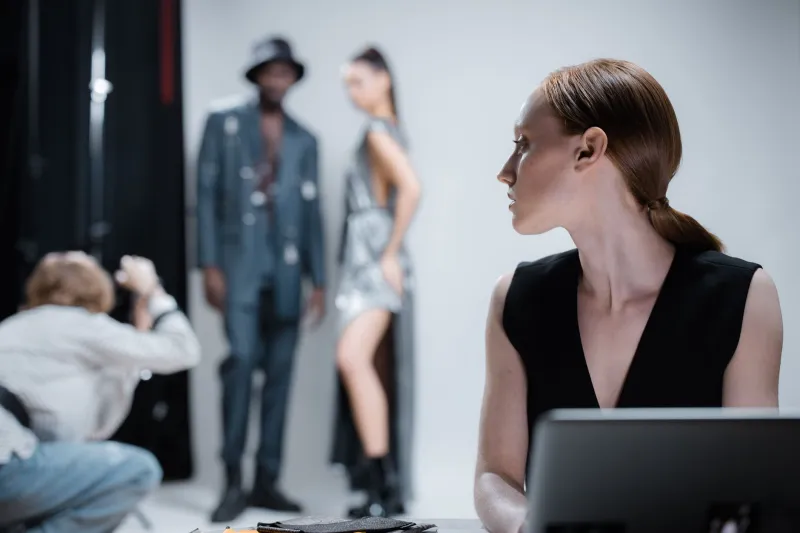
There's a moment at every charity runway show that feels almost cinematic. The lights shift, the music swells, and a model walks out in something extraordinary while the audience leans forward in their seats. For a few seconds, everything clicks. The cause feels urgent, the fashion feels alive, and the room feels like it actually matters.
What you don't see is the seamstress who re-pinned that garment forty minutes before showtime because the original alterations didn't account for a last-minute model swap. Or the production coordinator who sweet-talked a venue manager into extending load-in by two hours. Or the lighting designer who drove four hours round-trip to rent a specific fixture because the budget didn't stretch to the one they actually needed.
Charity fashion events are fueled by an invisible workforce — and for an industry that loves to talk about equity, it has a strikingly poor record of acknowledging the people who keep the lights on. Literally.
The Anatomy of a Show Nobody Sees
For every hour of runway that an audience experiences, there are roughly eight to twelve hours of preparation happening somewhere they'll never go. That's not an exaggeration — it's the working reality described by event coordinators, production assistants, and backstage crews across the country.
Take a mid-size charity runway show in a city like Chicago or Atlanta. You're looking at a team that might include a stage manager, a floor coordinator, a hair and makeup lead with a team of three or four, a wardrobe supervisor, at least one seamstress on call, a lighting technician, a sound operator, a venue liaison, a volunteer wrangler, a run-of-show caller, and a photographer or videographer. That's before you account for catering staff, security, and whoever's managing the check-in table.
Many of these roles are paid. Some are not. And the line between those two categories is often drawn in ways that have more to do with visibility than value.
Who Gets Paid and Who Gets 'Exposure'
Here's where things get uncomfortable. In the charity fashion space, the rhetoric of doing good has a long history of being used to justify undercompensating the people doing the actual work. A nonprofit budget is a real constraint — nobody's disputing that. But there's a difference between a tight budget and a culture that defaults to asking certain workers to donate their labor while others are paid without question.
Generally speaking, vendors with negotiating power — venues, catering companies, AV firms — get paid. Workers without that leverage — seamstresses, stylists, hair and makeup artists, production assistants — are frequently asked to volunteer or accept rates well below market value. The justification is almost always the same: it's for a good cause.
Kristin Okafor, a freelance wardrobe supervisor based in Los Angeles who has worked on more than thirty charity events over the past decade, has heard that line more times than she can count. "I support the causes. I genuinely do," she says. "But I also have rent. And there's something that feels off about an event that's raising money for a worthy organization while asking the people who made it happen to work for free."
This isn't a fringe experience. It's a structural pattern — and it tracks along familiar lines of race and gender. The roles most likely to be uncompensated or underpaid at charity fashion events skew heavily toward women and workers of color. The roles most likely to command full market rates tend to look very different.
The Logistics Nobody Glamorizes
Beyond the pay question, there's the sheer complexity of what this workforce manages — complexity that rarely gets acknowledged in the post-event recaps or the social media highlights.
Event coordinators are essentially project managers operating under conditions that would make most corporate environments flinch. They're reconciling donor expectations, nonprofit communications, designer relationships, venue requirements, and volunteer schedules — often simultaneously, often with budgets that shift late in the planning process.
Lighting and sound technicians are problem-solving in real time against venue limitations, equipment quirks, and runway configurations that weren't designed with their craft in mind. A hotel ballroom is not a theater. Getting a charity show to look and sound like a professional production in a space built for wedding receptions takes serious skill and serious improvisation.
Seamstresses and wardrobe teams are managing the gap between what designers send and what actually needs to happen on a live body in motion. Hems get let out. Zippers get replaced. Entire silhouettes get restructured with a few hours and a travel sewing kit. This is skilled labor. It is not a hobby.
What Recognition Actually Looks Like
Some events are starting to do this differently, and it's worth naming what that looks like in practice — not as a gold standard, but as a starting point.
A handful of organizations have begun publishing full production credits alongside their event coverage, the same way a film would roll credits. It sounds small. It isn't. Being named publicly in the recap, the press release, or the organization's annual report shifts the cultural narrative around who made the event possible.
Others are building backstage worker stipends into their fundraising goals from the jump — treating production labor as a line item with the same legitimacy as venue rental, rather than an afterthought to be negotiated down. When a fundraising target accounts for fair compensation, it changes the ask to donors. It also changes the culture of the event.
A few organizations have gone further, partnering with local trade unions and professional associations to establish minimum pay standards for specific roles. This approach requires more planning and more budget discipline, but it produces something rare in the charity fashion space: a workforce that's actually invested in the event's success because they're being treated as partners, not volunteers with skills.
The Fundraising Connection Nobody's Making
Here's the argument that should resonate with anyone focused on outcomes rather than optics: events run by well-compensated, well-supported production teams raise more money.
That's not a guess. It's the logical result of what happens when experienced professionals aren't stretched thin, aren't resentful, and aren't working their fourth volunteer gig of the month out of obligation. Shows that run smoothly, look polished, and feel emotionally resonant generate more donations. The production team is directly responsible for all three of those things.
Underpaying or ignoring your production workforce isn't just an equity issue — it's a fundraising strategy problem. The two things are connected, and the charity fashion world would benefit enormously from treating them that way.
Giving Credit Where It's Overdue
The catwalk exists because someone built it. The lights are perfect because someone calibrated them. The gown fits because someone stayed late with a needle and thread. The whole event happened because someone kept seventeen moving parts from colliding.
None of those people walked the runway. Most of them didn't get a mention in the recap. Some of them didn't get a paycheck.
If charity fashion is serious about the values it puts on the runway — equity, dignity, community, care — those values need to extend to the people running the show from the back of the house. Recognizing them publicly is a start. Paying them fairly is the point. Building systems that make both of those things standard practice is the work.
The cause deserves a great show. The people who build that show deserve better than a thank-you that never makes it out of the green room.